AI agents for business are no longer a groundbreaking technology of big tech. They have now been put into practice as tools that help small and mid-sized companies reduce manual work, accelerate the decision-making process, and expand operations without increasing the number of people.
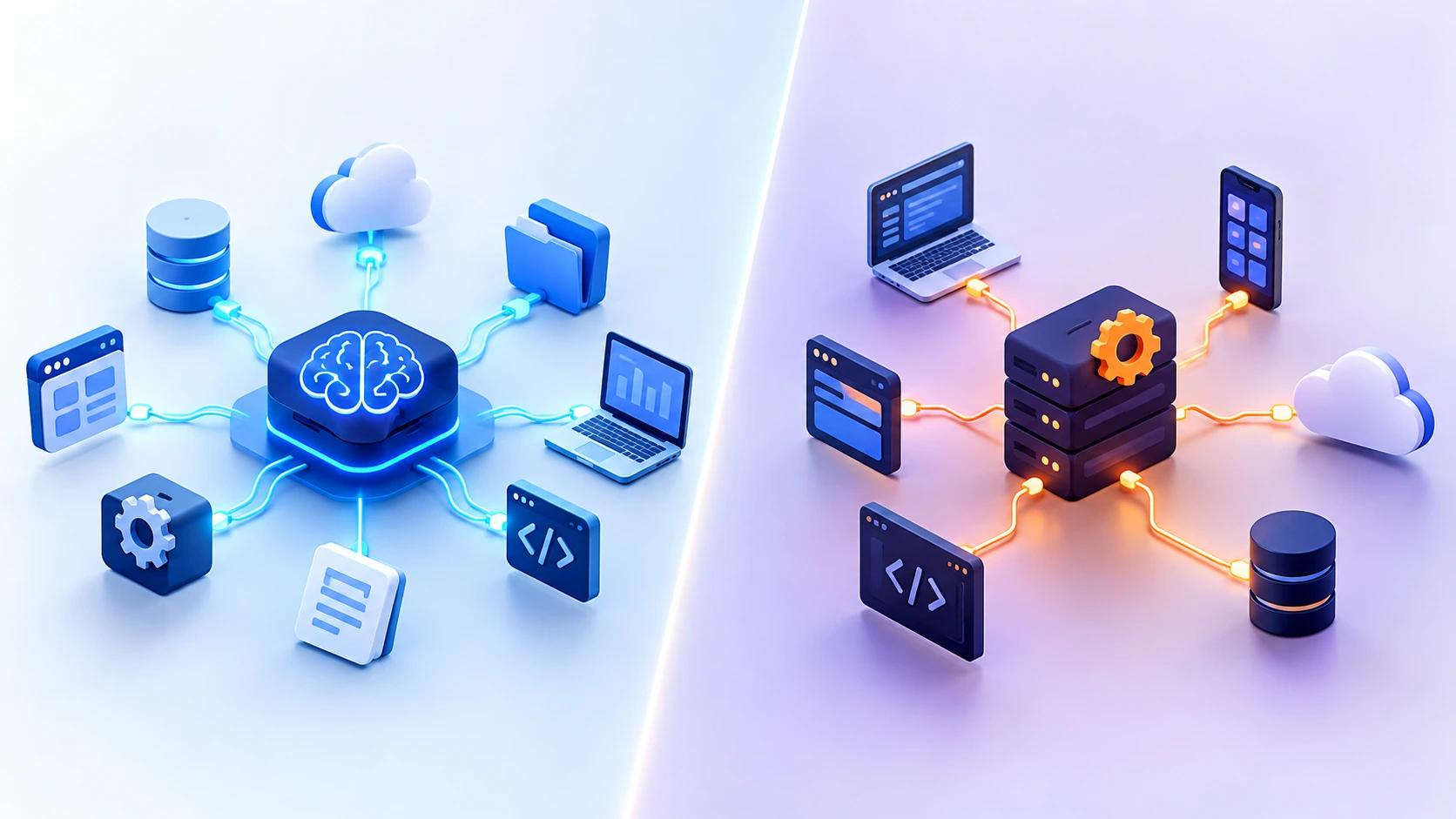
In contrast to the conventional automation scripts, which operate according to predefined rules, AI agents for business are able to think, learn, and take multi-step actions with little human effort. This is the reason why increasingly businesses are abandoning simple chatbots and adopting fully autonomous systems that have the capability to perform complete workflows.
What Are AI Agents?
An artificial intelligence agent is a computer program designed to interpret data, act and decide based on it, and perform actions in a particular direction without necessarily being guided by human instructions in steps. These agents are capable of planning tasks, employing external tools, and changing the approach according to new data, which is powered by large language models.
Just in case you wish to get deeper into the technical analysis of the way these systems are created, our guide on the AI agent orchestration gives a detailed explanation of how multi-agent coordination is designed.
Why Enterprise AI Agents Are Gaining Traction
Enterprise AI agents are being adopted at a rate higher than most anticipated, in part due to addressing the problem that traditional software could not, which is unstructured, judgment-based tasks at scale. Some of the reasons why enterprises are spending a lot are:
- Lessened operational expenses through automation of back-office functions.
- Quick reaction to customer service and service support.
- Optimized performance of data-intensive tasks such as reporting and compliance.
- Scalability would not require a corresponding up-scaling of the workforce.
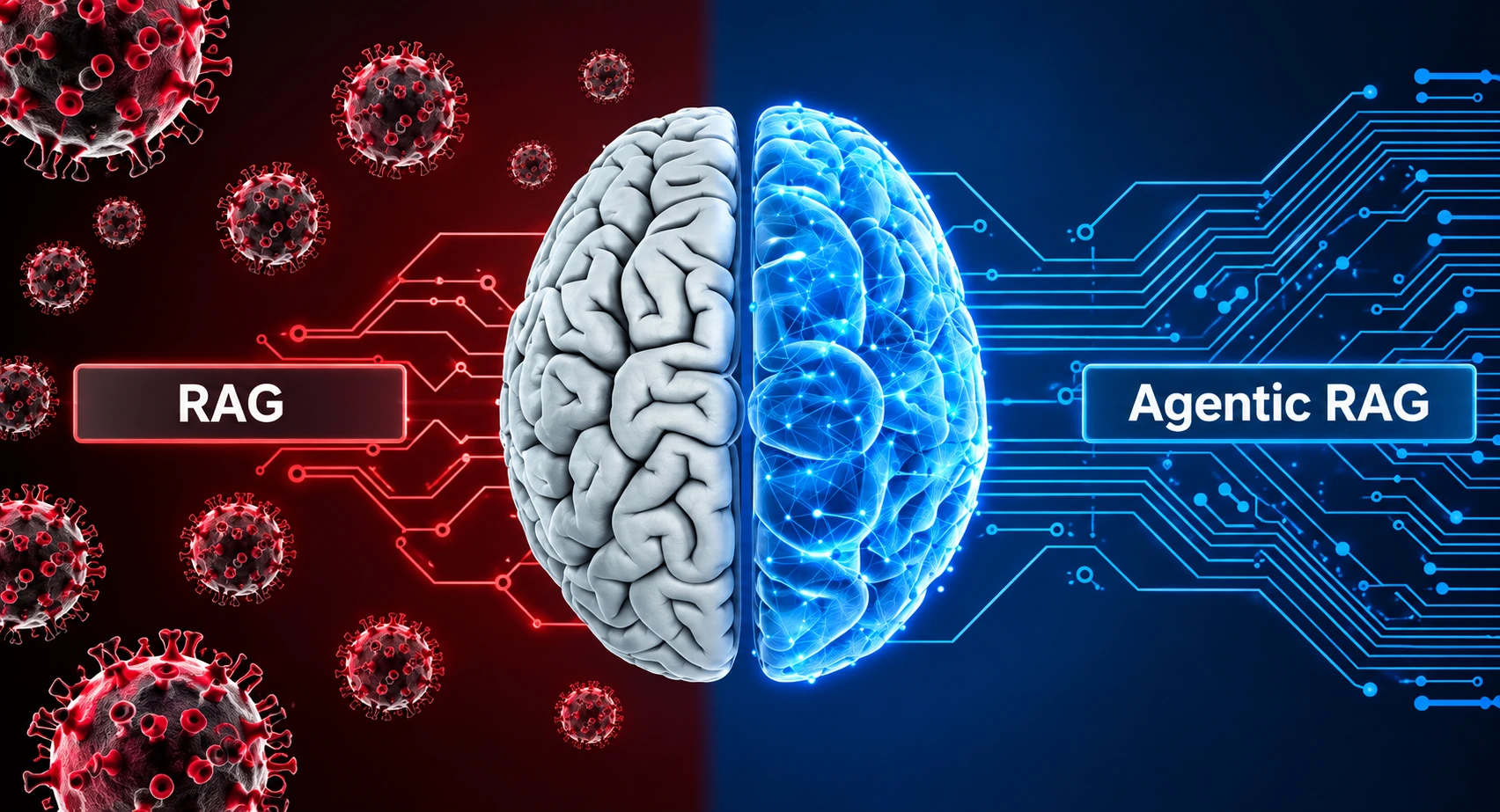
In companies that have workflows that are heavily based on retrieval, such systems as agentic RAG are increasingly being incorporated in the process of accessing and reasoning on company data by enterprise AI agents.
Top AI Agent Use Cases for Businesses
The value becomes simpler to perceive by understanding actual AI agent applications. Uses in industry are:
Customer support – The AI agents are able to address tickets, escalate more complex issues, and keep track of context in conversations.
Sales and lead qualification – Agents are able to score leads, automatically follow up and update CRM records in real time.
HR and recruitment: Since the time of resume screening all the way to work onboarding, AI agents are transforming the way HR teams work; our overview of AI HR software features a variety of tools already performing this task effectively.
Marketing processes – Agents will be able to create different types of content, run campaigns, and interpret performance, as seen in AI in marketing.
Finance and reporting – Automation of reconciliation, expense classification and checks on compliance.
How to Approach AI Agents Integration
The integration of AI agents is where business can typically falter not due to the complexity of the technology, but due to the need to integrate it with the existing technologies like CRMs, help desks, and internal databases in a clean way.
An effective integration strategy encompasses:
- Identifying the workflow you would like to automate and mapping it out before choosing a tool.
- Beginning with a demonstration use case instead of a full implementation.
- Providing the agent with secure and authorised access to pertinent data.
- Experimenting a lot then take away human control.
In case you are scouting this on customer-facing systems, agencies that provide AI chatbot integration solutions would assist businesses to connect the agents to support and sales infrastructure that the business already has without necessarily developing all that internally.
Getting Started with AI Agents for Business
New companies in this field are not advised to attempt automating everything immediately. A narrow pilot, explicit measures of success, and readiness to tune the agent behavior within the first few weeks will lead to much superior outcomes than an unmonitored rollout on a large scale.
Final Thoughts
One of the most viable changes in the way businesses are conducted today are AI agents for business. Customer Support, HR, Marketing: Companies which start small, integrate wisely and measure results are the ones that have achieved genuine improvements due to automation.
FAQs
What are AI agents for business used for?
Automation of functions related to customer support, leads qualification, HR screening, reporting and other with minimal human intervention.
Why do enterprise AI agents differ from chatbots?
Chatbots respond to queries; enterprise AI agents think, plan and act in different systems.
What are the typical AI agent use cases?
Customer support, sales follow-ups, HR onboarding, marketing and finance automation.
Are AI agents hard to integrate for small businesses?
Not really, especially when you start with a single process and measure results prior to scaling.
How long does it take to introduce AI agents into a business?
It takes several weeks to roll out a pilot project and several months to roll out at enterprise level.